
Module 1E: Lens Selection
E. Lens Selection
Lens Selection
The creative potential of photography expands when we understand the vast array of available lens options and how lens selection impacts how an image is recorded.
 Focal Length
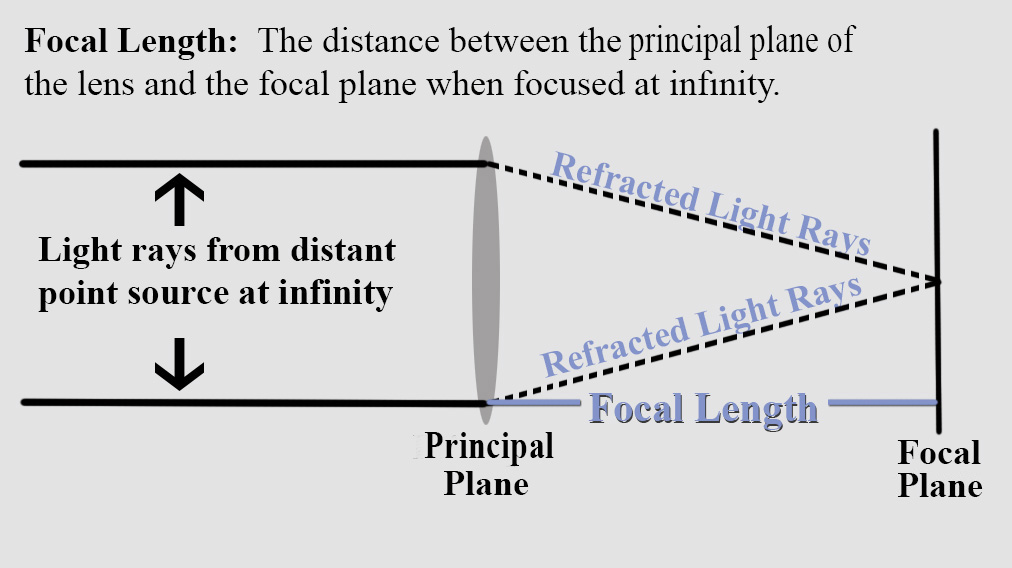
Focal length is defined as the distance between the principal plane of the lens and the focal plane (sensor plane) when focused at infinity.
The illustration on the right represents a simple lens and parallel light rays captured from an infinitely distant point. When the light rays pass through the principal plane, they are refracted and redirected. The plane at which these rays intersect is the point where the light rays are focused to a single point or the focal point.
Cameras use complex lenses instead of simple lenses, but the idea is the same. The light passes through several lens elements and is refracted onto the sensor plane (focal point), where the light is recorded. The focal length is the distance between the principal and focal planes (when focused at infinity). The focal length of lenses used with DSLRs is expressed in millimeters (mm), just as the diagonal measurement of the sensor is also measured in millimeters.
Normal Lens
The term Normal lens refers to a lens that records a scene with a field of view similar to how the eyes see a scene. There is little or no magnification or expansion of the image.
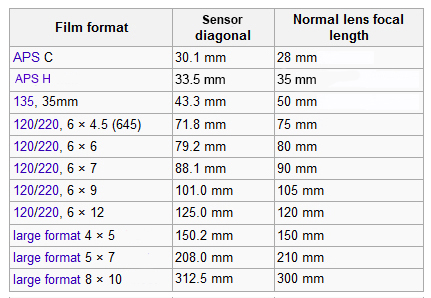
The focal length of the Normal lens is approximately the same millimeters as the diagonal measurement of the sensor in millimeters.
In the chart at the right, notice how the Normal lens focal length is approximately the same as the sensor diagonal of each sensor film format.
With a DSLR camera, the full-frame sensor is the size of the traditional 35mm film frame. Cropped sensors such as the APS-C and the APS-H are smaller than a full-frame sensors.
On a full-frame sensor (35mm), the 50mm lens is considered normal. On an APS-C-cropped sensor camera, the 28mm is a normal lens. (Any focal length close to the diagonal size is considered normal, so a 45mm lens on a full-frame sensor would also be considered normal.)
Wide-angle lenses
Lenses with a focal length smaller than normal for that specific format is considered wide-angle. This type of lens records a wider expanse than the normal lens. Common wide-angle lenses include 35mm, 28mm, 24mm, and 14mm for cameras with full frame sensors. These expand the view as recorded by a normal lens.
Wide-angle lenses are the perfect choice for photographing indoors with limited space or for photographing larger groups. They are also an excellent choice for landscape and scenic photography.
Wide-angle lenses tend to distort horizontal and vertical lines, especially on wider, wide-angled lenses. For example, straight lines may bend slightly with a wide-angle lens.
Wide-angle lenses inherently have a large depth of field, so backgrounds and foregrounds almost always appear sharp when focused, even a few feet out.
Wide-angle lenses can be used to exaggerate the difference in size or distance between a subject and elements in the foreground or background. Objects closer to the camera will appear larger than objects in the background, which appear smaller and further away.
Photographers avoid using wide-angle lenses for close-up photographs of people as distortions of facial features created by using these lenses can be very unflattering.
Telephoto Lenses
Lenses larger than the normal lens are considered to be telephoto lenses as they begin to magnify the image compared to what is seen with the naked eye. Common telephoto lens lengths are 85mm, 135mm, 200mm, and 500mm. A 100mm lens magnifies the image size by about twice as much as a 50mm lens. The image at 200mm is magnified about four times larger than the same image if taken at 50mm.
Telephoto lenses visually bring objects that are far away closer. This is the ideal lens for wildlife and sporting events.
Telephoto lenses can compress objects in the foreground and the background with the subject, making them appear closer together than they are.
They are also an excellent choice for photographing people. Telephoto lenses have a shallower depth of field than a normal or a wide-angle lens. This helps the photographer eliminate background distractions when taking portraits. The larger the focal length, the shallower the depth of field.
The larger the focal length, the more difficult it is to hold the camera steady. This is because larger focal lengths increase the magnification of the image and the magnification of movement. A sturdy tripod is invaluable, especially in low light.
Tips:
· To hand-hold a telephoto lens, you should use a shutter speed at least equal to the focal length of the lens. For example, a 100mm lens will require a shutter speed of 1/125 to hand-hold with reasonable sharpness. A 200mm lens requires 1/250 to hand-hold.
· Use a higher ISO to achieve faster shutter speeds when hand-holding.
Prime Lenses
Prime or fixed lenses have a single focal length. Common prime lenses include 28mm, 50mm, 85mm, 135mm, 200mm, and 500mm. The advantages of prime lenses are that they tend to be sharper and often have larger aperture openings than zoom lenses.
Zoom lenses
Zoom lenses cover a range of focal lengths. They combine a minimum and a maximum focal length and provide all of the focal lengths in between.
The most significant advantage of a zoom lens is having a range of focal lengths in one lens. This also gives you the ability to crop in the camera. The photographer can quickly tighten the crop around a subject or compose the image with more space around the subject without having to step forward or backward.
Zoom lenses may not be as sharp as prime lenses and may not provide large maximum lens openings, making them less effective in low light.
The largest aperture value of a zoom may be set to keep the exposure consistent throughout the zoom. However, many less expensive zooms have a variable aperture, which changes the aperture automatically when the lens is set to the largest aperture and zoomed to larger focal lengths. For example, a f/3.5-f/5.6 variable aperture 70-200mm lens will provide the photographer with an f-stop of f/3.5 when the lens is at 70mm. When zoomed to 200mm, the f-stop changes to f/5.6 as its largest lens opening. This can be very disconcerting when using the camera in manual and the camera resets the f-stop during the zoom.
Macro Lenses
Macro lenses allow the camera to focus at very close distances to make subjects appear much larger. This helps to highlight fine details in photographs of very small objects such as insects, jewelry, flowers, and other small items. They may also be used to capture minute details of much larger items. Macro lenses can achieve life-size magnification with minimal distortion.
Angle of View
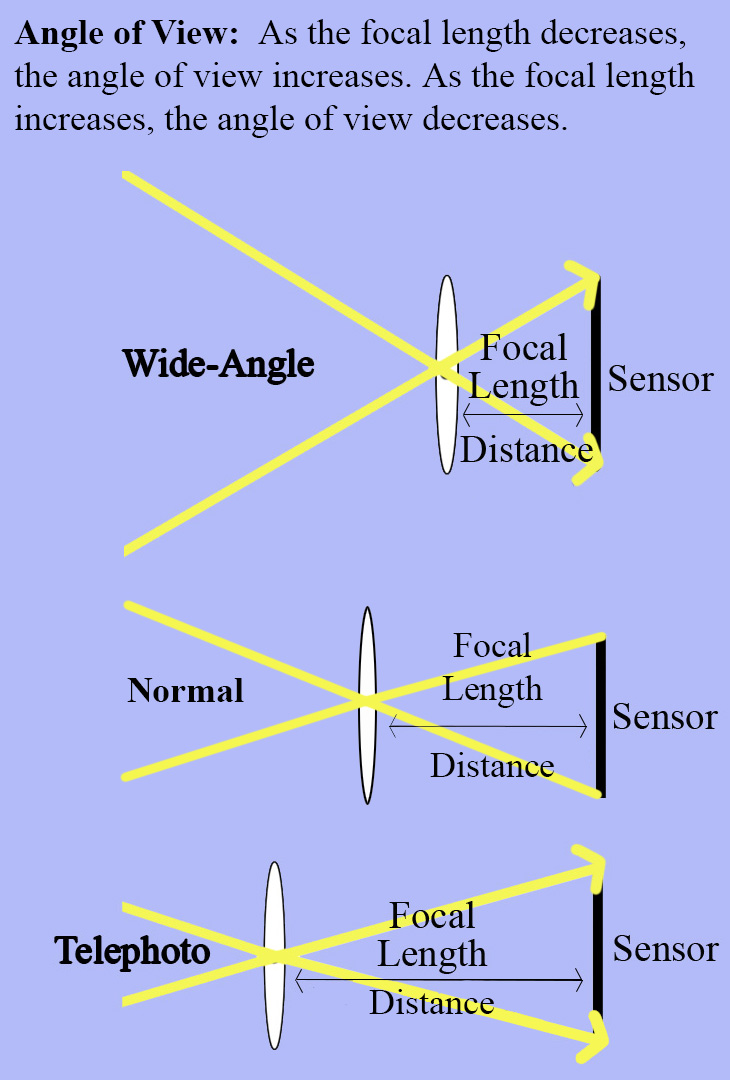
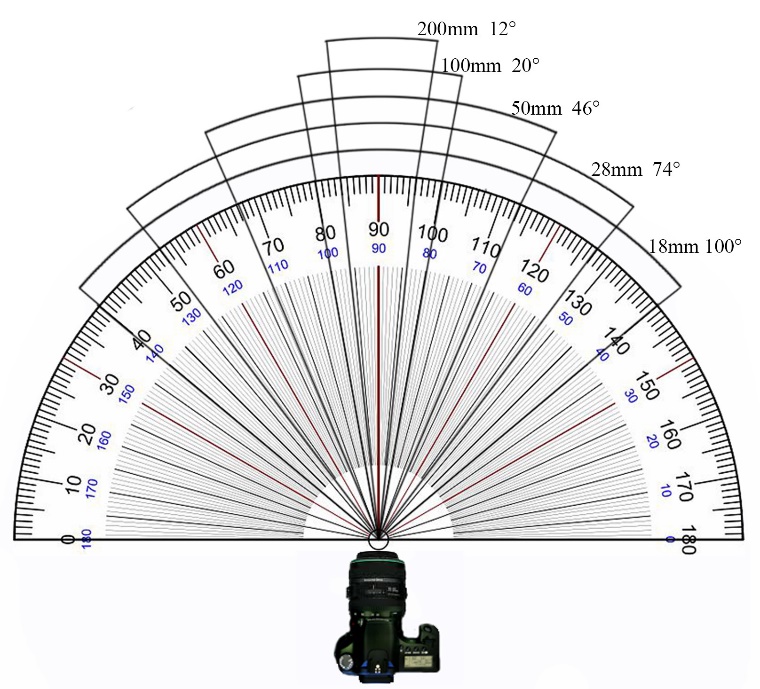
The lens's focal length (mm) determines the angle of view or how much of a scene is recorded (field of view). Remember, a normal focal length records a scene the same way our eyes see the scene. See the illustration.
As the focal length decreases, the principal plane moves closer to the focal plane, increasing the angle of view.
As the focal length increases, the principal plane moves further from the focal plane, and the angle of view decreases.
If you need a little help understanding this concept, try this little exercise:
· Make a circle with your thumb and index finger and hold it about 6 inches from your eye. Your fingers represent the principal plane. Now, look through the circle of your fingers with the other eye closed and pretend this is the angle of view of a normal lens.
· Now, move the circle one inch from your eye. Notice you now have a wider angle of view.
· Now, move the circle away at your arm’s length. Notice how you now have a narrow angle of view.
(Remember, this is not a perfect analogy, but it may help you understand the relationship between focal length and angle of view.)
Your Vision is in The Lens You Use!
So much of capturing your vision for any given image involves selecting the right lens. Understanding how lens selection impacts depth of field and how to change perspective as it relates to your subject is helpful.
WHAT YOU SEE AND WHAT YOU GET
We have already seen that the lens's focal length (mm) determines the angle of view- or how much you see in the image. The illustration below shows a 50mm lens on a full-frame sensor camera that captures a 46° view of a scene. A 100mm lens narrows the angle of view to 20°. When used on a full-frame sensor, a 200mm lens captures a 12° view of a scene.
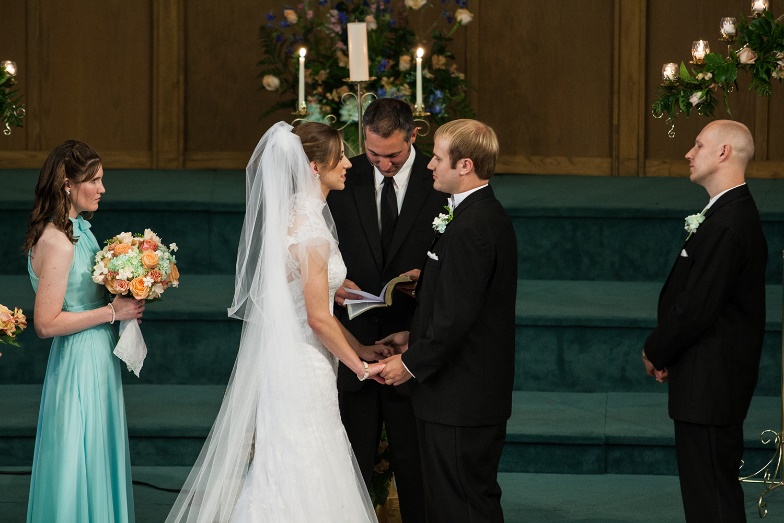
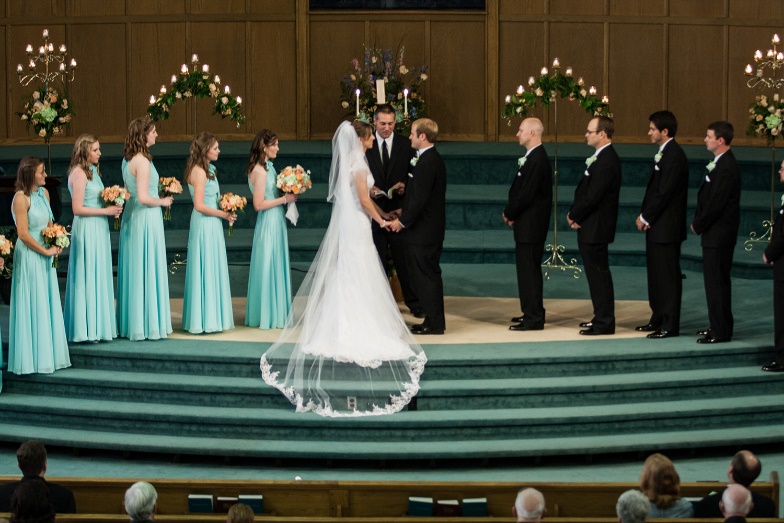
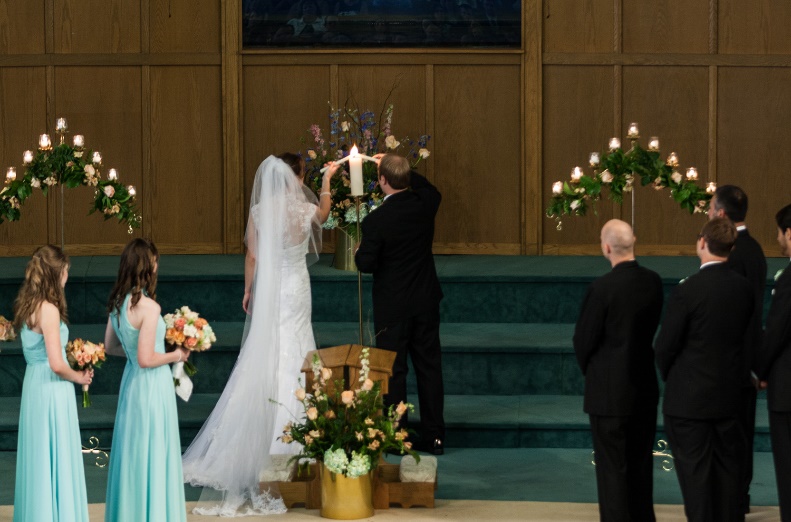
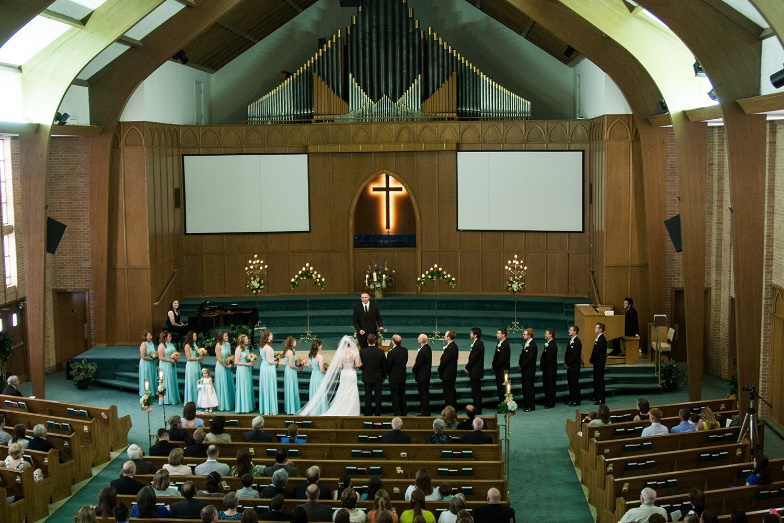
The images below illustrate the angle of view of 35mm, 80mm, 120mm and 200mm focal lengths. While it is obvious that the bride and groom appear closer at longer focal lengths, look at the images again and note the changes in the angle of view.
GET RID OF DISTRACTIONS
Narrowing the angle of view allows the photographer to isolate the best parts of the background by eliminating areas that may create distractions.
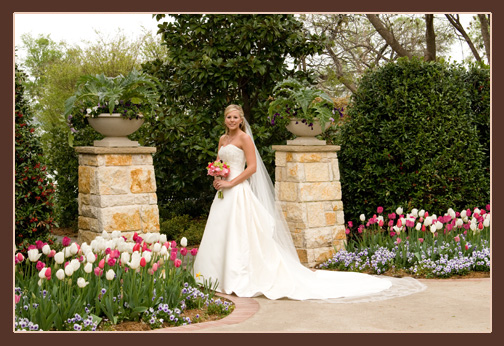
The image above is taken at a wide angle of view. It shows a nice background but a bright sky in the upper corners. Since the eye goes to the brightest area of a dark image, the bright sky pulls the eye away from the subject.
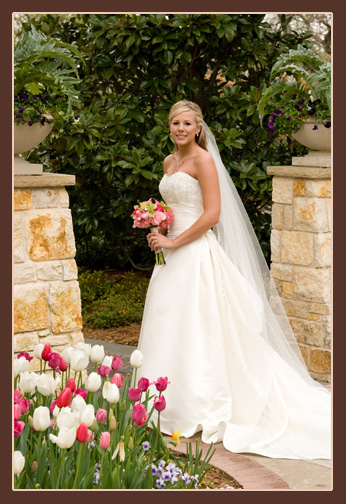
In the image below, the use of a telephoto lens with its narrow angle-of-view captures the best part of the scene and eliminates the distraction of a bright sky.
Digital Sensors
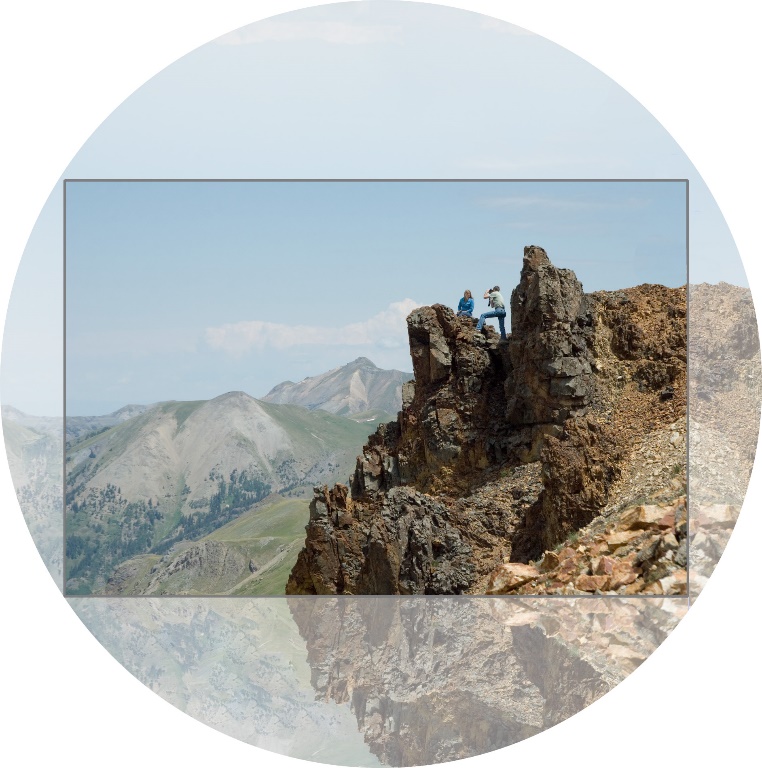
A lens must allow the image to cover the film or sensor from corner to corner.
DSLR and mirrorless cameras are generally offered with full frame or cropped sensors. A full-frame sensor will yield an image in the same aspect it would have been recorded on a piece of 35mm film.
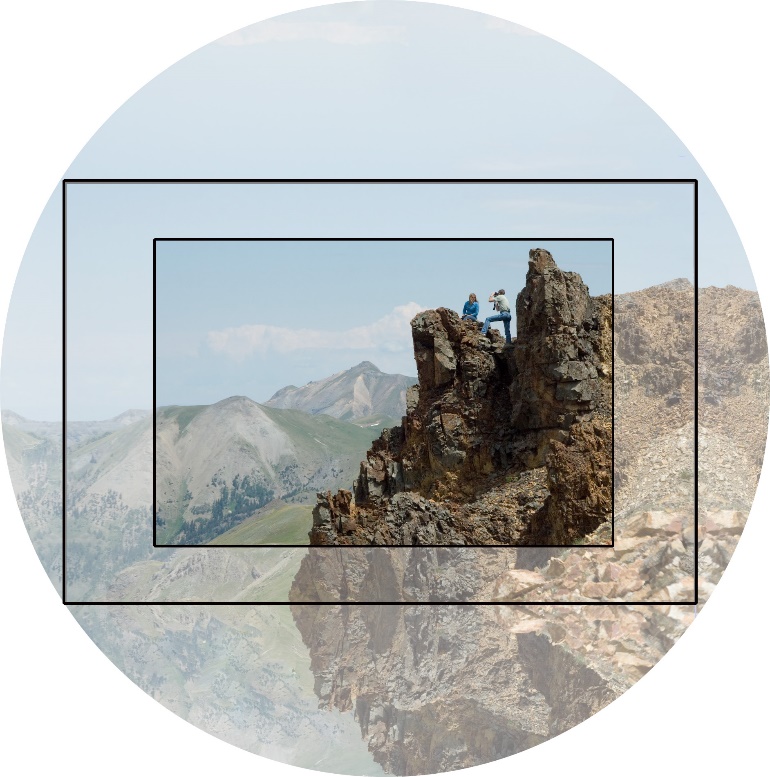
A cropped sensor is smaller than a full-frame sensor, only records a portion of the image that would have been captured on a full frame sensor.
This has the effect of recording the image with more of a telephoto effect when using the same lens on a cropped sensor.
A multiplication factor is used to express this telephoto effect. For example, a multiplication factor of 1.6 would mean a 200mm lens on a camera with a cropped sensor will have the effective angle of view of a 320mm lens. (200mm x 1.6 = 320mm)
This effect of increasing the net focal length of a telephoto lens on a cropped sensor camera is sort of a bonus for images benefitting from a telephoto lens.
When a wide-angle lens is placed on the cropped sensor camera, it effectively reduces the angle of view.
For example, a 28mm lens on a cropped sensor with a 1.6 multiplication factor (28mm x 1.6 = 45mm) has an effective angle of view of a 45mm lens on a camera with a full frame sensor. In other words, the 28mm wide-angle lens is no longer wide-angle.
For a camera with a cropped sensor, you may consider a wide-angle lens designed for a cropped sensor. But beware, these lenses will not move with you to a camera with a full frame sensor as the throw of the image onto the sensor plane is too small to cover the full-frame sensor corner to corner.
Perspective
In the book, Photography (10th Edition) by London, Stone and Upton, perspective is defined as the apparent distance, size and depth of objects within a two-dimensional image. Think of it as the relationship of the foreground and background to the subject.
Perspective is determined the moment you select a place to stand to take a photograph. The various lenses that you may use at that same camera position capture the scene with a specific angle of view, but they do not change the perspective of the relationship of the subject with the distance, size and depth of the background that you are photographing.
Even when using a zoom lens and zooming through the various focal lengths from wide-angle to telephoto, does not change perspective...unless YOU move.
It is the camera position that determines perspective. Take a look at the images below.
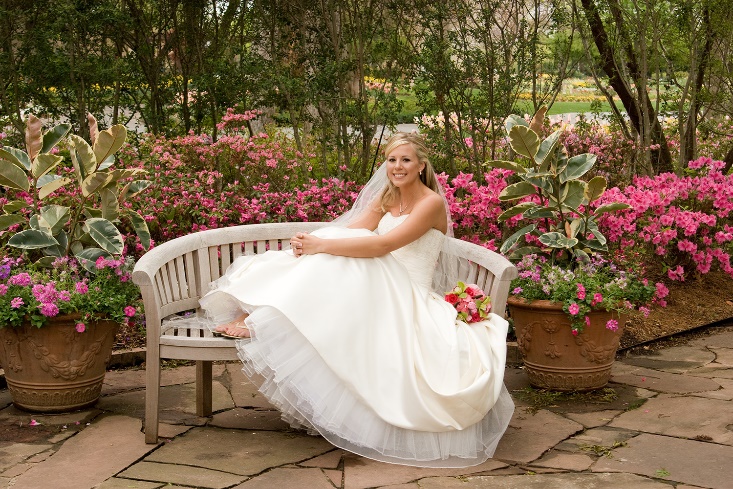
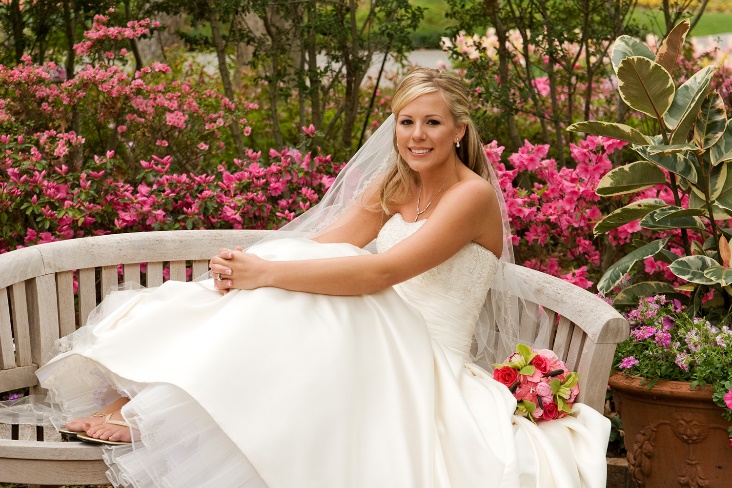
The image on the top was taken at 35mm and the second image at 70mm and only the focal length changed, not the position of the camera.
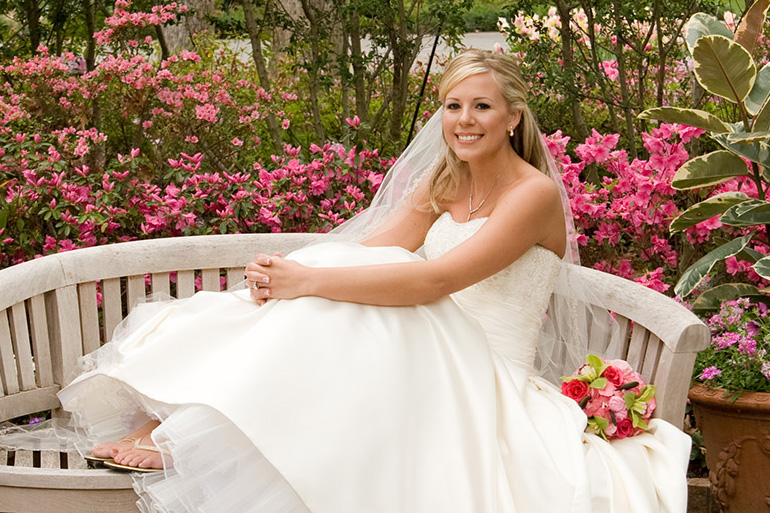
The image above is the SAME IMAGE as the image taken at 35mm above. It has been cropped to the same crop as the 70mm image. Notice, the perspective did not change!
Changing focal lengths without changing camera position does not change camera perspective or even the relationship of subject to background. It only changes the angle of view.
Zoom With Your Feet
To change perspective means to change camera position. Moving higher, lower, closer, and further away all change perspective.
It is often said that telephoto lenses compress the background, and wide-angle lenses create distance in the background. In the examples above, that was not the case.
If you photograph a subject with a normal, wide-angle, and telephoto focal length and do not change distance, the perspective is the same in all three.
However, if you take an image with a normal lens, then compose the subject with the exact crop by moving closer and using a wide-angle lens, there will be a noticeable difference in the relationship of the subject to the background. The background will appear smaller and further away.
If you then compose the subject in the same crop by backing up and using a telephoto lens, the background will appear much larger and closer, compressed, to the subject.
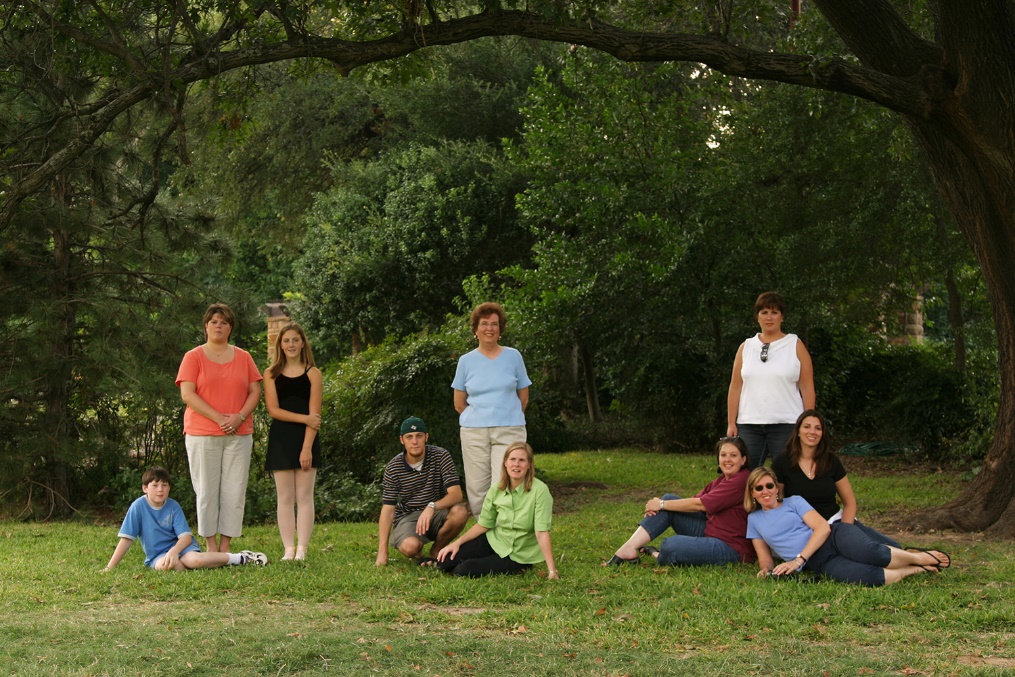
In the image above, we can see the change in perspective from changing camera position. This image was created with a 28mm lens. Notice the size of the brick column behind the far-left group of three. Also note the relationship of the size of the foliage in the background with the over-hanging tree branch.
In the bottom image, the camera moved back several yards, and the focal length was changed to 60mm while keeping the same crop as the image above. Notice how much larger and closer the brick column is now compared to the previous image. Also notice how much larger the bushes and trees are in the background as they relate to that over-hanging branch. Now we see that zooming with the feet changes perspective.
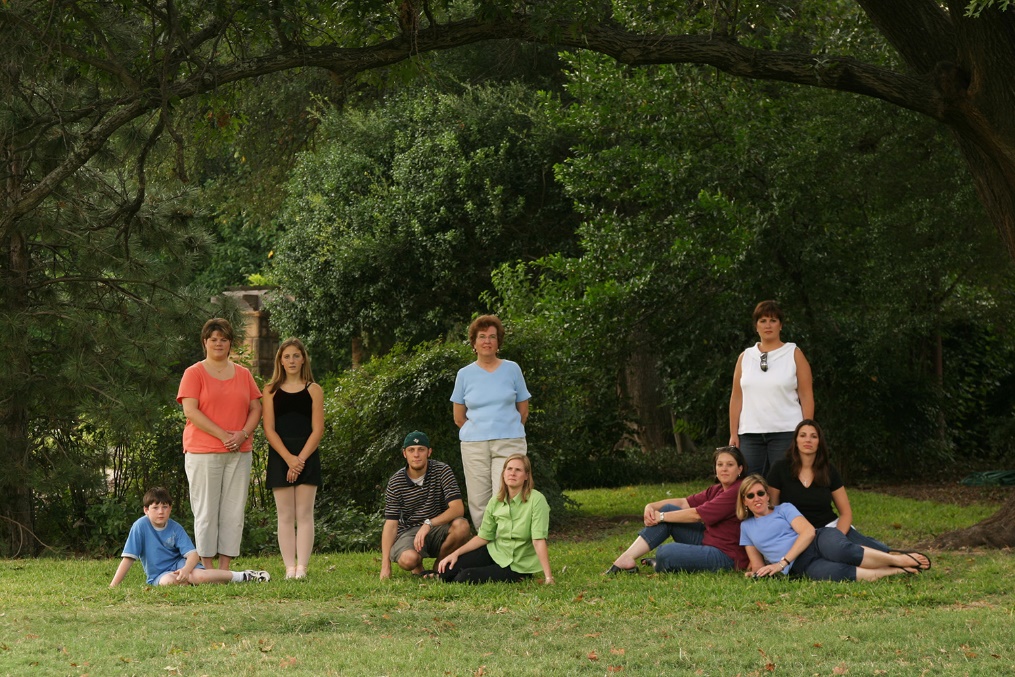
Using Compression
We have just seen that moving further from the subject and using a telephoto creates compression - or elements in the foreground and background appearing closer in relation to the subject. The longer the focal length, the greater the compression and the closer the subject appears to be to the background.
This is especially helpful when you are dealing with a large background element which is important to the scene. By working farther away from the background and working with a telephoto lens, the photographer is able to scale a very large background to an appropriate size as it relates to the subject.
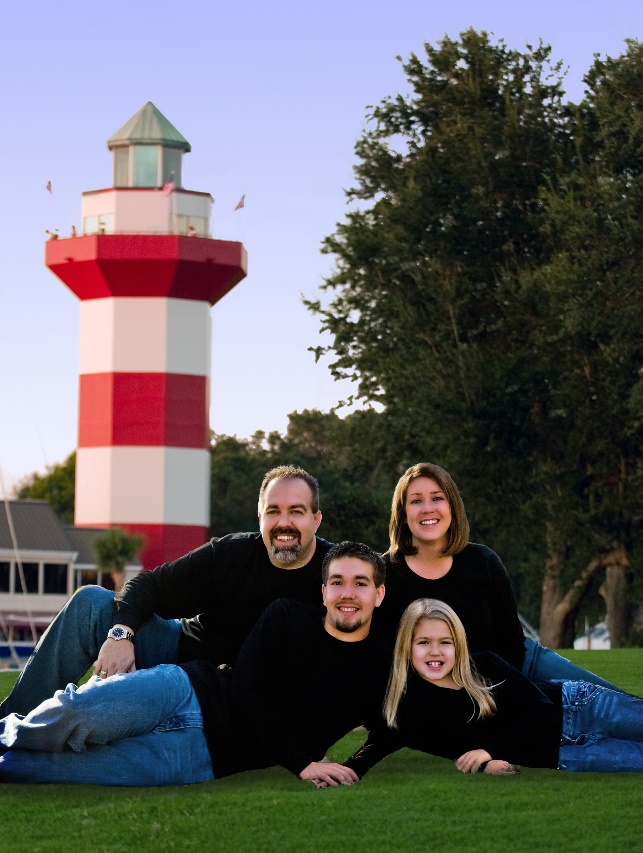
For example, in the image at right, the photographer was able to scale the size of the lighthouse as it relates to the family by moving the family further away from the lighthouse and using long focal length telephoto lens.
How much different would this image have been if the family was posed at the base of the lighthouse and the image was captured with a wide-angle lens?
Wide angle lenses tend to create distance between elements in the background and foreground in relation to the subject.
The image of this bride below was taken at 35mm. The depth between the building and the bride is exaggerated and the building appears further away.
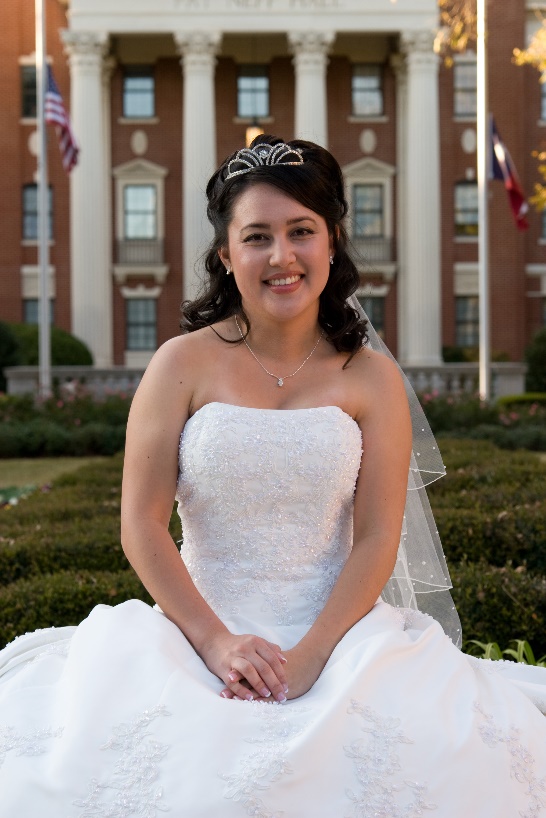
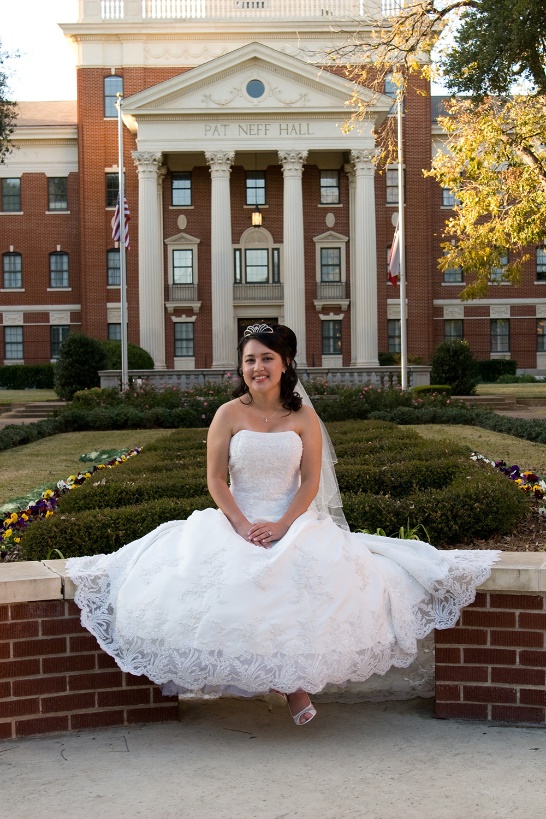
With the image of the same bride above, the camera was backed up and zoomed to 70mm. It is compression that makes the building look closer to the bride than it really is.
Controlling the angle of view allows the photographer to use the best parts of a given scene.