
Module 2G: Speedlights
 G. Speedlights
Working with Speedlights
The power output of a speedlight varies from brand to brand and with different models. The versatility of a speedlight depends on the unit providing ample power and the ability to power the output down when necessary.
The output of the speedlight is key because this determines the f-stop ranges you will be able to use for exposures with the flash.
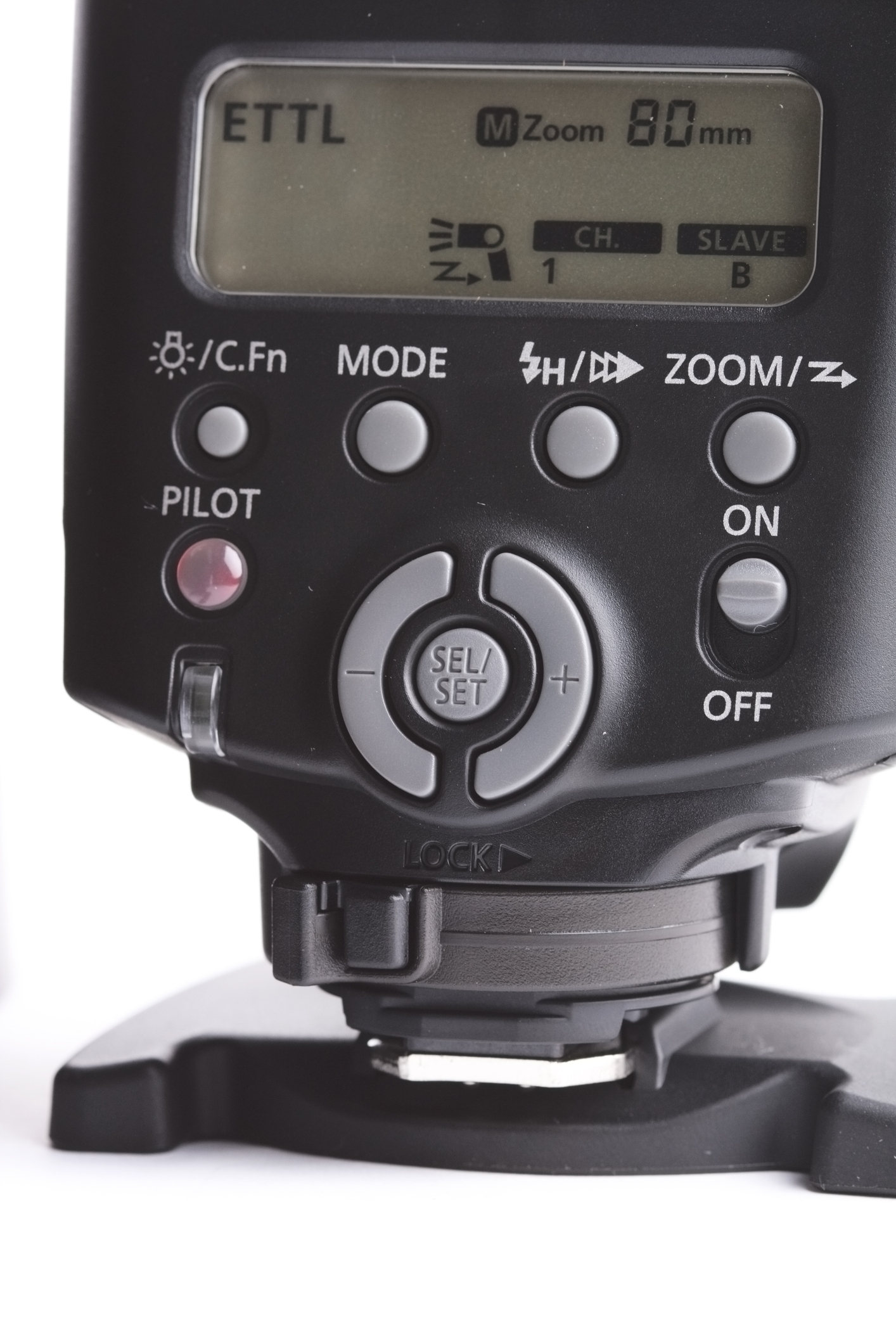
Most speedlights can be used at a constant output (manual) or with a variable output (TTL / eTTL).
Speedlights can be mounted onto the camera’s hot shoe, but they can also be used with a flash bracket which raises the flash higher above the camera. This is helpful in reducing the red eye effect that can happen when the flash and the lens are closely aligned on the lens axis.
Raising the flash can also help with casting unsightly shadows downward behind the subject instead of the shadow outline that often occurs with on-camera flash photography.
When mounting the speedlight onto a bracket, an accessory will be required to fire the flash since it is no longer sitting in the camera’s hot shoe. This can be accomplished with a radio transmitter and/or trigger set up, or with a hot shoe cord that connects one end onto the camera’s hot shoe and provides a mountable hot shoe that mounts onto the bracket.
TTL
When using a speedlight in TTL mode, the light passes through the lens and is measured at the sensor.
The camera and speedlight work together to determine the output of the flash. This occurs as the camera is taking a measurement of the amount of light reflected from the subject that is reaching the sensor.
With this information, the camera directs the speedlight to adjust the amount of light it will need to provide for a proper exposure at a given f-stop.
In TTL mode, the camera determines the flash output giving the photographer some degree of flexibility to work without having to think too much about exposure variations based on flash-to-subject distance.
The downside is that the photographer never really knows how much flash is being delivered during any given exposure. Many different factors such as composition, zooming and background variations will impact the flash output.
Manual Flash with a Speedlight
For photographers who want full control and consistent output of the flash, Manual Mode is the best option.
In this mode, the flash delivers a consistent measurement of light regardless of the ambient exposure, crop, focal length of the lens or environmental elements.
Preparing the Speedlight for use in Manual
Many speedlights have tracking controls that alter the output of the flash based on the focal length of the lens in use. The speedlight’s zoom head moves in and out to focus the light or spread the light to coincide with the angle of view of the lens.
This process causes the effective flash output to increase as the light is focused at longer focal lengths and decreases at wider focal lengths as the light is spread across a wider area.
You can see the same effect with a focusable flashlight.

The image above illustrates how the speedlight will use the zoom head to focus the light into a smaller angle of coverage when zoomed in with a telephoto lens.
The longer the lens, the more concentrated the light becomes and the less area it covers. The other notable characteristic is that the effective output of light becomes brighter.
The next illustration below represents the flash coverage when the lens is zoomed out toward the wider angles. The wider the angle of the lens, the wider the angle of coverage will be emitting from the flash.

The light must spread so that there is enough flash coverage from left to right for the focal length that is being used.
The effective output of the flash is less when at wide-angle than it is at telephoto settings.
*To use a speedlight effectively in manual mode, this zoom head tracking must be disabled. This is done by setting the zoom to Manual Zoom (MZoom) and selecting a fixed flash coverage position for the zoom head. The two benefits of doing this are:
1. The speedlight will no longer track changes in the focal length of the lens being used.
2. The speedlight will now provide a consistent and reliable output every time the flash fires.
Once the zoom head is disabled, the consistency of output allows a photographer to easily predict the exposure based on the flash-to-subject distance.

· At a 1-foot distance, the result is f11.
· Double the distance to two feet and the result is a two-stop reduction in the light reaching the subject. (f5.6)
· Double the distance again to four feet, and the result is a four-stop reduction that reaches the subject or, f/2.8.
· Cut that distance in half to two feet and the result is a two stop increase in the light reaching the subject. (f/5.6)
Using what we learned about the Inverse Square Law, we can make minor adjustments to the exposure on the subject by simply moving the light a bit closer or a bit farther away from the subject. Moving the light closer increases the exposure and moving the light further away decreases the exposure.
Using the Speedlight On-Camera
While it may be convenient to slide the speedlight into the hot shoe or on a bracket, just remember this, when using the flash on camera, the lighting will always be harsh and flat.
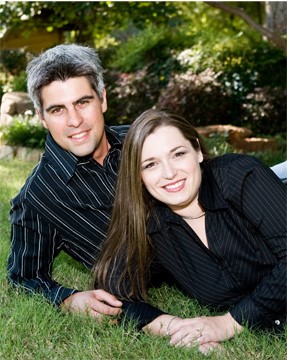
You can see this in the image of the couple above.
The lighting is harsh because a speedlight is such a small light source. The light is flat because the light always strikes the subject directly from the front.
Still, there are certain situations such as event photography and photojournalism where on-camera flash makes sense.

In these situations, it would not be practical to try and meter every image.
The use of TTL (or eTTL) makes sense when working at an event with on-camera flash, using a zoom lens, and photographing at various camera-to-subject distances.