Module 3B: Utilizing the Natural Environment
 B. Utilizing the Natural Environment
ORGANIZING WHAT YOU SEE
Photography is about designing and composing an image that is visually pleasing or effective, and recording it technically correct on the sensor. So, as a photographer, it helps to have a technical mind as well as an artistic mind.
COMPOSITION
The placement or arrangement of elements within the image. This means the photographer must make decisions about what will be included in the picture as well as what will not. Elements to consider are Subject, Foreground, Background, Props, and the Center of Interest. Elements of composition are the tools a photographer uses to design the image and tell the story. Rule of Thirds, Balance, Diagonals, Repetition, Pattern, Leading Lines, and Framing are just a few of the tools available.
CENTER OF INTEREST
Every picture starts with a center of interest. It is the focal point of the photographic story. It might be an action, a person, and object, or a location. The center of interest is the reason for the picture.
Color Harmony
Just like in music when individual notes come together to form a pleasing chord, so too do various color schemes and selections work together to form a pleasing and harmonious palette to the eye.
Groupings of colors such as warm and cool or similar hues such as blues and browns, tend to be harmonious.
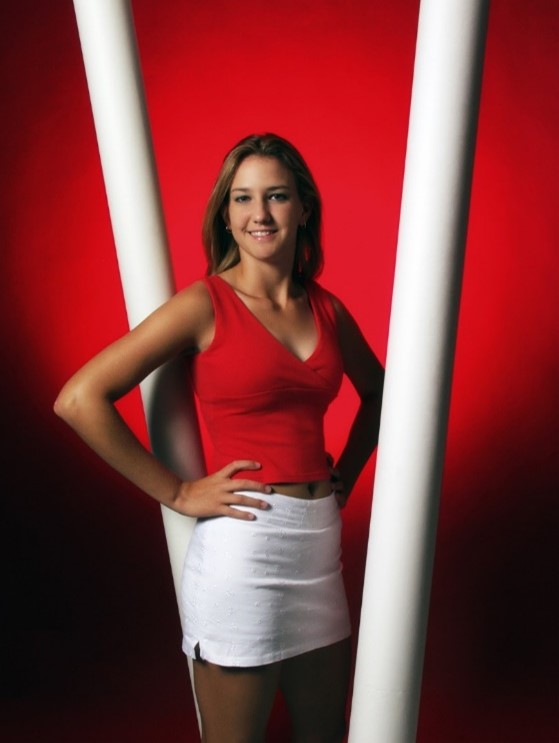
The image below uses warm tones in the color palette to create color harmony.

In the image below, a red gel was added to the background light and the white diagonal elements were added to create color harmony with her red shirt and white skirt.
Complementary colors (opposite colors on the color wheel) can also produce visual harmony in an image; not because they are similar, but because they are pleasing. The warm lights inside the church create a pleasing harmony with the blue sky.

Pattern
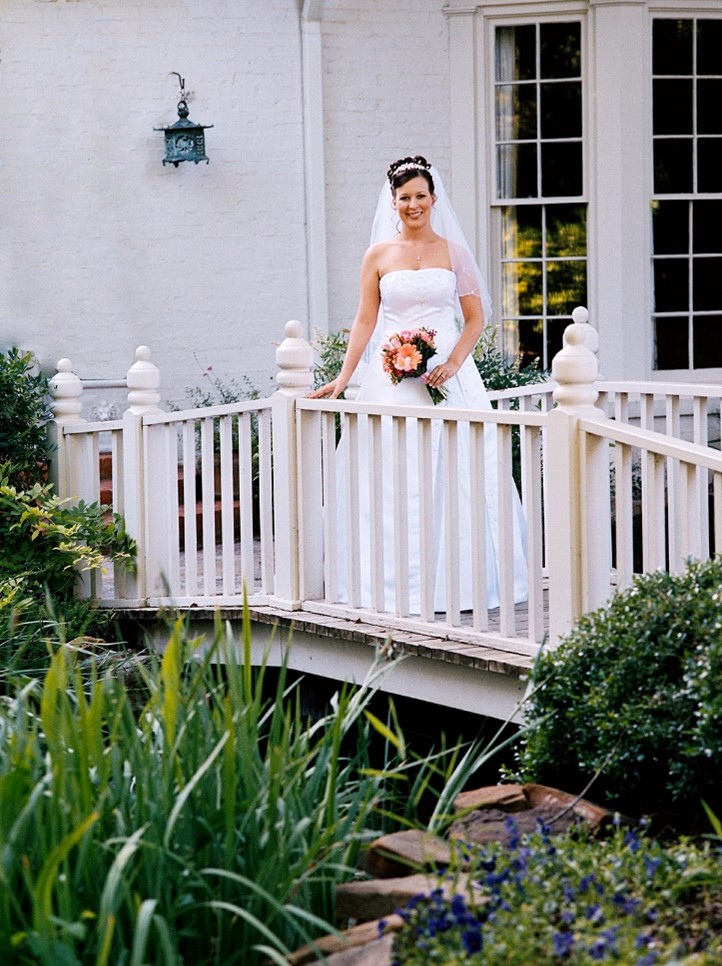
Repeating patterns create strong compositional interest. Repeated patterns in the background can serve to set the subject apart from the background. They can also provide visual movement within an image.
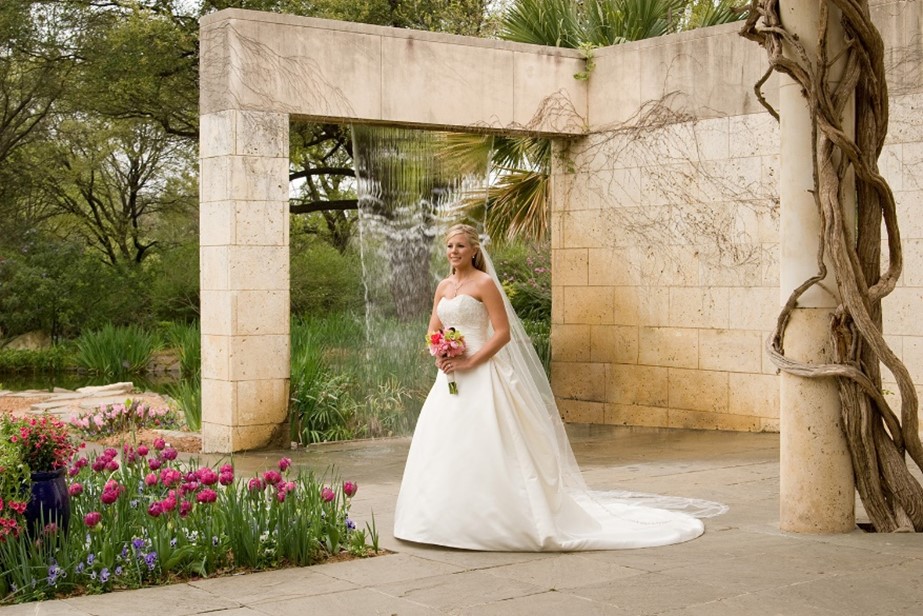
This bridal portrait has strong repeating vertical patterns which contrast with the triangular composition of the bride and her dress.
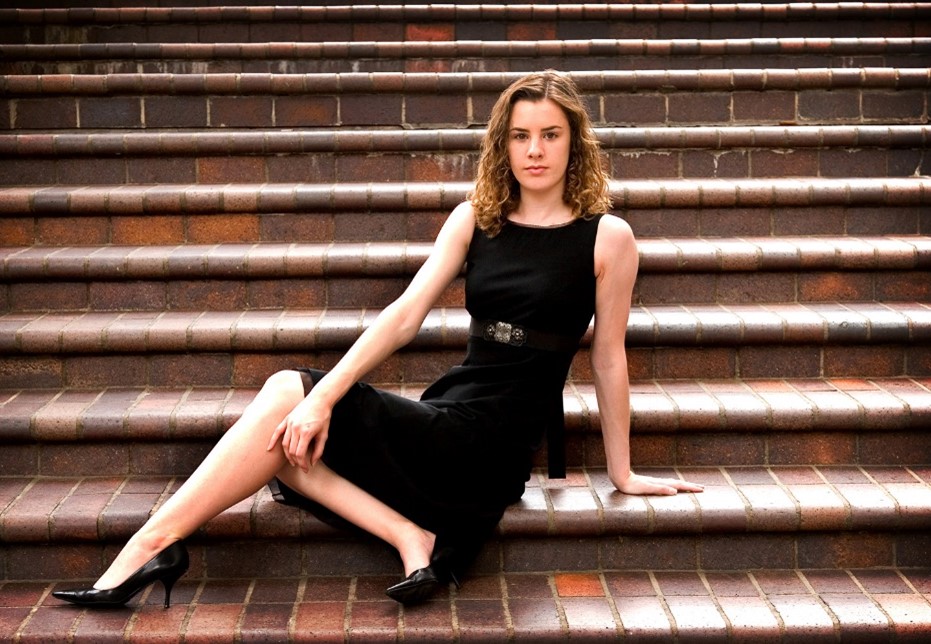
The strong horizontal pattern of the stairs provides a nice way to set off the diagonal and triangular composition of the subject.
The repeating patterns of diagonal lines created by the corrugated tin help set off the vertical orientation of this pose. The diagonal lines act as leading lines which lead the viewer's eye to the subject.
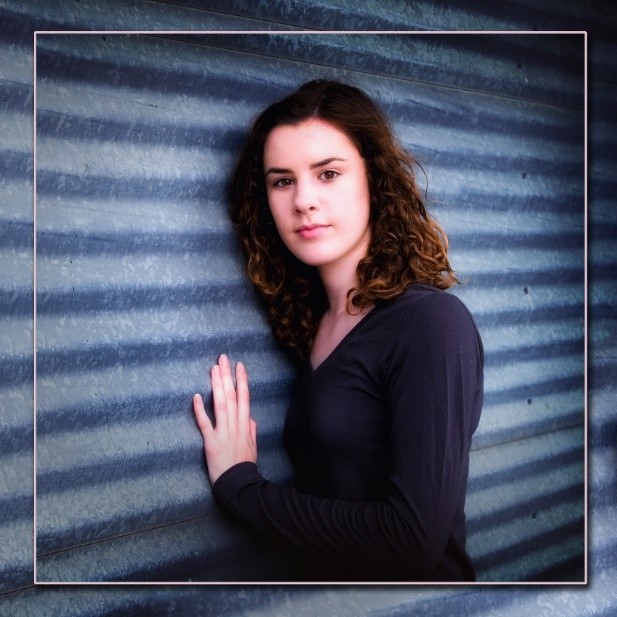
The viewer’s eye goes to the face and then tends to follow the contour in front of her body to the hand which leads the eye back to the face. These lines and the subject’s pose help keep the viewer engaged in this image.
Direction of Lighting
Analysis of the environment includes understanding the direction of the light. In natural environments, the light direction and light quality change throughout the day. A location that is well suited for photography in the afternoon may be unsuitable during the morning hours.
You should look for directional lighting patterns which allow for raking light to create highlights and shadows which create texture and detail while also creating desirable lighting patterns on the subject.
In the image below on the left, the window provides a strong directional light, however, the lighting on the front of the bride’s dress is flat because it strikes her dress from the front. The result is that much of the detail of the dress is blown out because of the flat lighting on the dress.
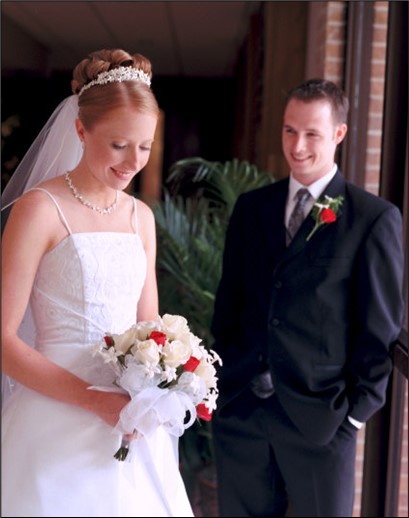
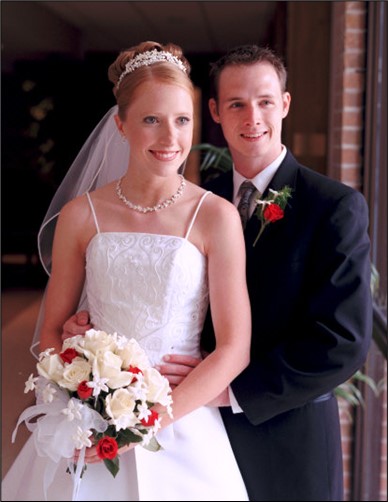
With the image at right, the bride’s body was turned away from the window so that the directional light would rake across the front of the dress. This creates nice texture and detail in her dress. Turning her head back toward the window also created a nice short lighting pattern on her face.
The image on the left was taken during morning hours when the sun was behind the building. During afternoon hours this location receives full sun and hard shadows.

There can be dramatic seasonal changes to lighting patterns and light qualities of natural environments due to the natural changes of the position of the sun in the sky during spring, summer, fall and winter seasons. Make a point to note these changes as you work in the same natural environments throughout the year.
Distractions
Analysis of natural venues includes becoming aware of any distractions that may be present in the location. Distractions may include unwanted highlights and hard shadows, distractions in the background such as people or cars, unsightly power lines, and backgrounds that may be simply too busy.

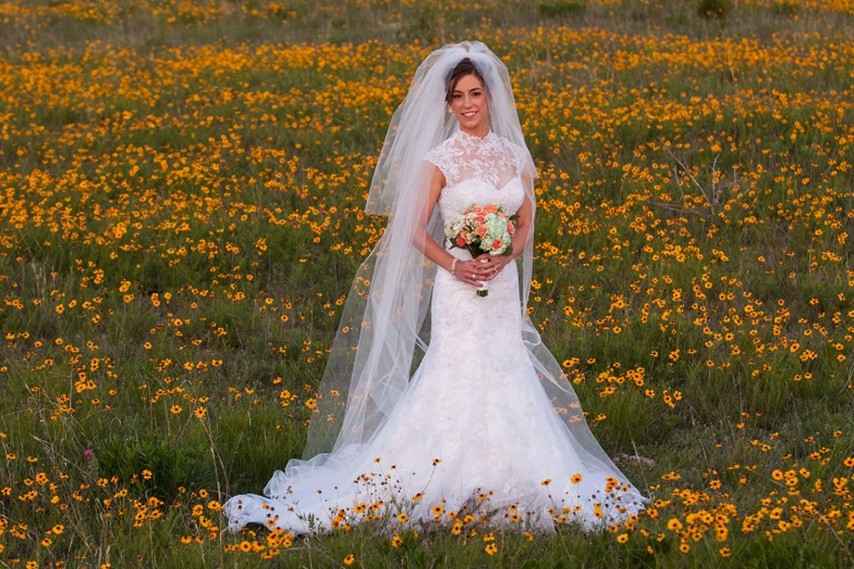
Many of these distractions can be minimized by using a long telephoto lens and a shallow depth of field. Sometimes, it is as simple as changing camera angles. The higher camera angle and zooming in slightly allowed the photographer to crop out the distracting horizon line.
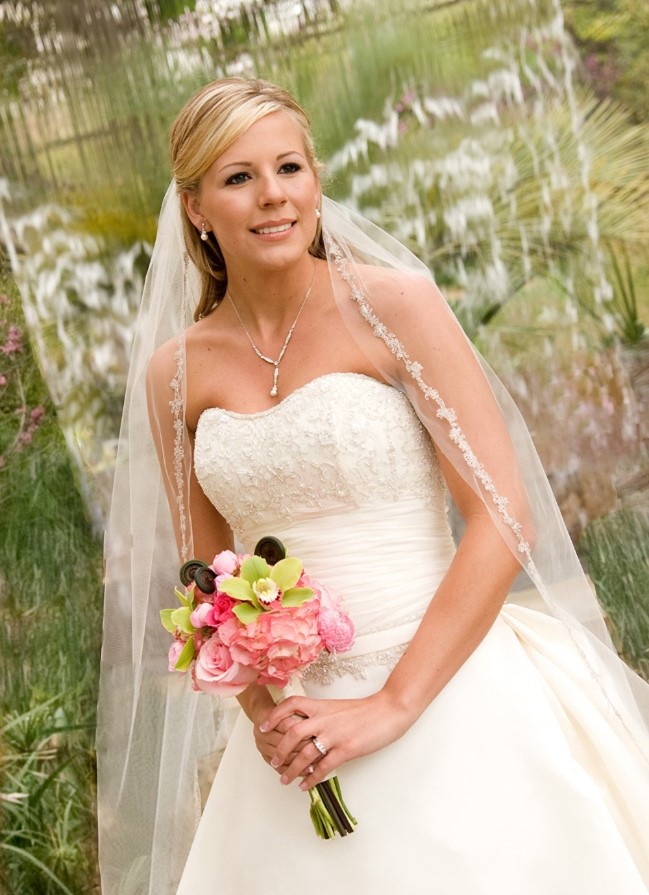
This wide-angle photo of a bride had a few distracting elements, so another image was captured using a telephoto lens to eliminate the distractions.
Perspective
Notice how the 28mm lens on the left gives the image an expanded view and allows the foreground and background to overpower the bride.


By backing up and moving to 120mm, the compression created a nice proportion of the bride to the foreground and background elements (right).
Selective Backgrounds
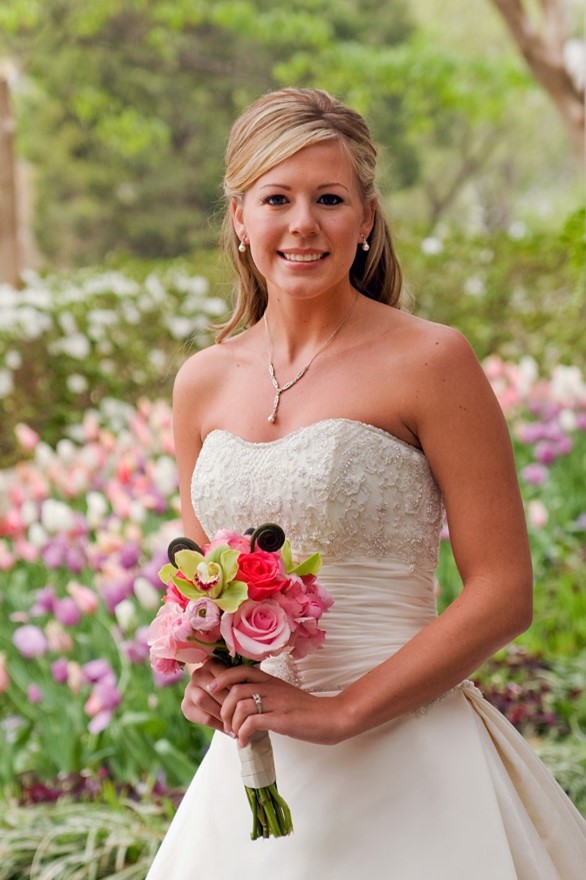
The bridal portrait below was taken with a 28mm lens and has a busy background. Backing up and using a 70mm lens changes the perspective and isolates the background to the best part of this scene.

Balance is created when all of the elements an image are in visual harmony. Balance includes physical balance such as weight and size as well as color balance.
Symmetry
Images which seem to create even balance left and right or top and bottom are said to have symmetrical balance.
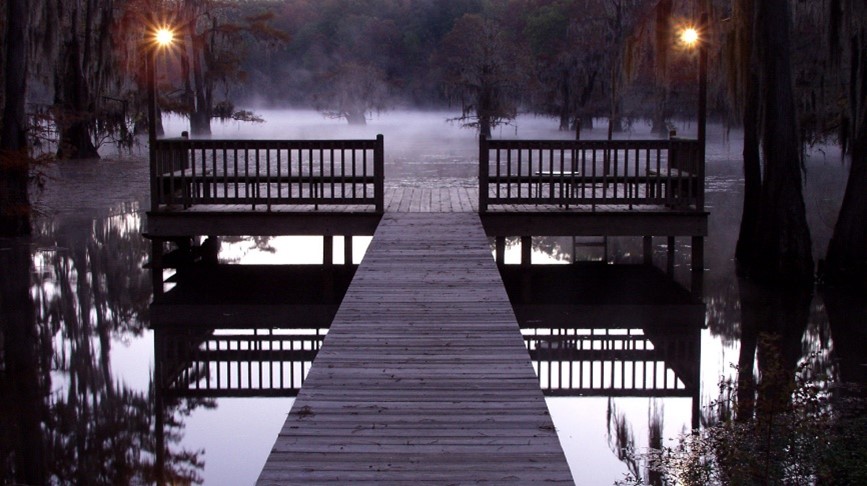
The image above uses strong symmetrical balance as the elements on the left and right are practically even in size and tonal values. Even the illuminated light fixtures add to the balance of this image.
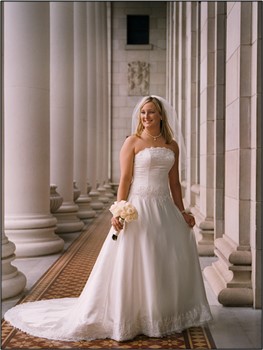
In the image of the bride below, strong symmetry adds to the strength of the composition. Center placement of the subject between the elements of balance keep the viewer’s attention on the bride.


In the image above, symmetry is found in the windows on the left and right. There is also a sense of balance created between the dark values of the fireplace and the dark values of the image on the mantle. The fireplace and the framed image also provide a sense of balance with their shapes.
Symmetry in composition is passive because it does not create tension.
Asymmetry
Physical balance does not require the elements to be the same size or even symmetrical. Heavy objects may be counter-balanced by lighter, smaller objects.
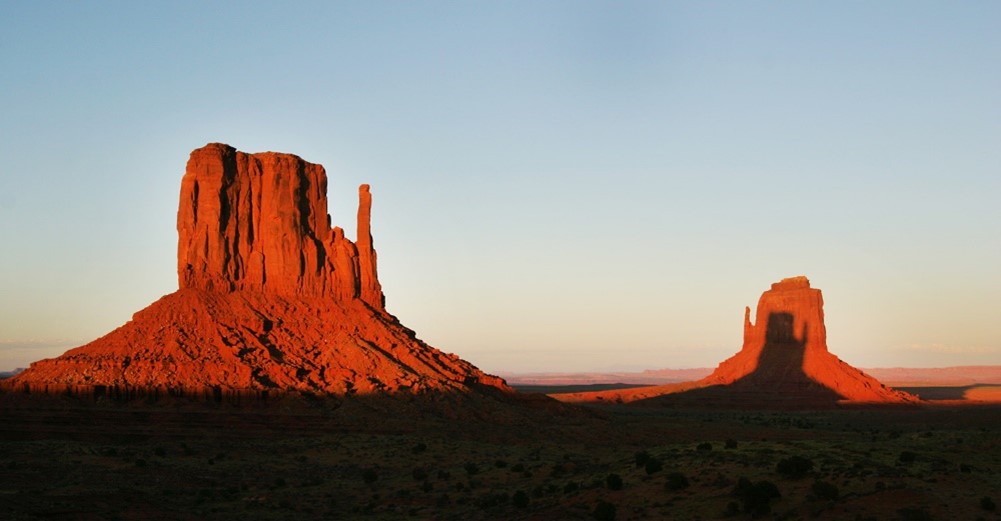
This image of The Mittens in Monument Valley illustrates the concept of visual balance. Without the formation on the right, this composition would be heavily weighted on the left and would seem out of balance. Even though the formation on the right is much smaller, it occupies just enough space to provide visual balance to the image.
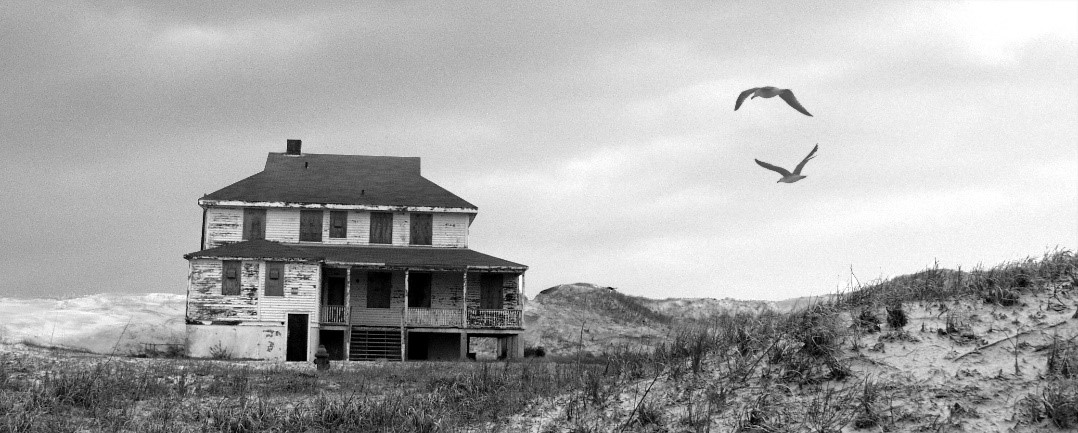
The birds in flight create a nice asymmetrical balance with the old beach house on the left. Without the birds in this composition, the house weighs heavy on the left and the void sky on the right becomes a distraction.
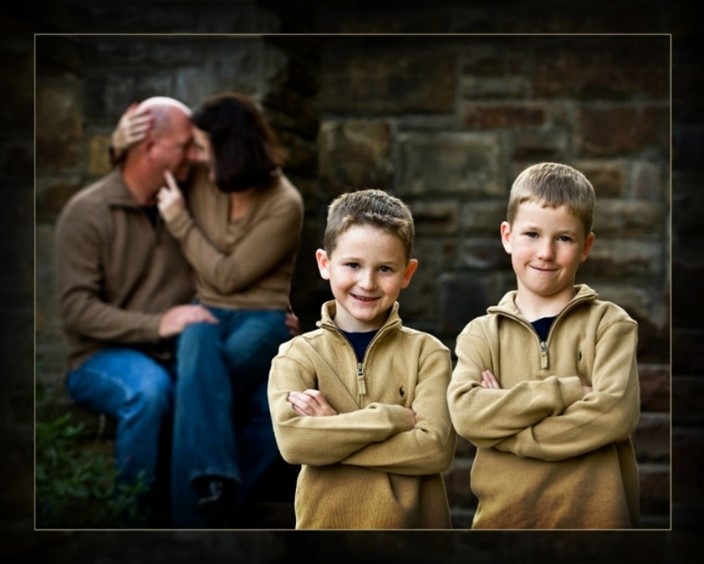
The boys in the foreground are in an asymmetrical balance to their parents in the background. Because they are visually larger in the composition, they are also the primary center of interest, and the parents are the secondary center of interest.
Asymmetrical balance is active because it calls the viewer’s attention to the larger element.
Visual Balance
In the image below on the left, the tall, thin shrub on the left provides a visual balance to the dark window on the right. The image is thrown out of visual balance when the shrub is removed (right).