
Module 3E: Composing Elements in a Scene
E.  Composing Elements in a Scene
Elements in an image include foreground, middle ground and background as well as the subject and any props. The placement of the elements should work together to bring attention to the subject and the subject’s relationship with the environment.
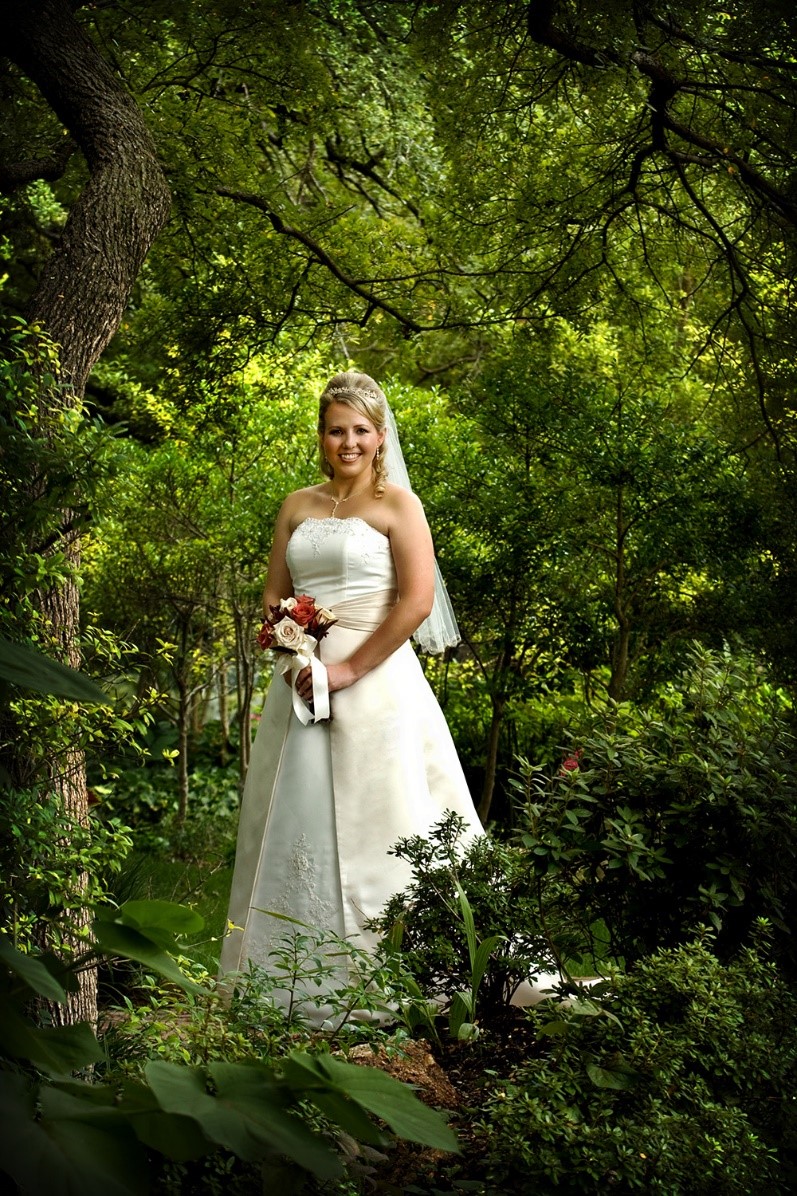
In the image of the bride above, foliage in the foreground provides a framing element to direct the eye to the bride.
In the image below, the leading line of the water and the diagonal lines of the sun’s rays decide the best placement of the bride and groom. Placing them at the intersection of these two lines created a strong point of interest.

It is good practice to place the subject against a background that is free of distractions, especially around the head and face.
Horizontal lines that intersect the head can create a busy background and unwanted distractions, as seen in this next image.

To get a cleaner composition, a higher camera angle was used to get rid of a distracting horizon.

In this image below, taken inside a canyon, the subject is placed at the darkest part of the background so that she stands out.

She was also placed under a bit of downlight which provides very nice separation on her hair. The large formation on the right frames her within the composition. The natural formations on the canyon wall all work together to lead the eye to her.
In a similar compositional pattern of repeating lines, the couple is placed further away from the camera.

This gives the feeling that the viewer is observing them without intruding on them. This gives the image more of a feeling of intimacy.
Utilizing Props
Props can be used to help tell the subject’s story or add a nice touch of interest to an image. Use of props can be appropriate and tasteful if you follow a few guidelines. Props should add value to the image. Props help the viewer understand more about the subject and who the subject is and how he or she thinks or feels. The image below lets the viewer know music and his guitar are part of who he is.

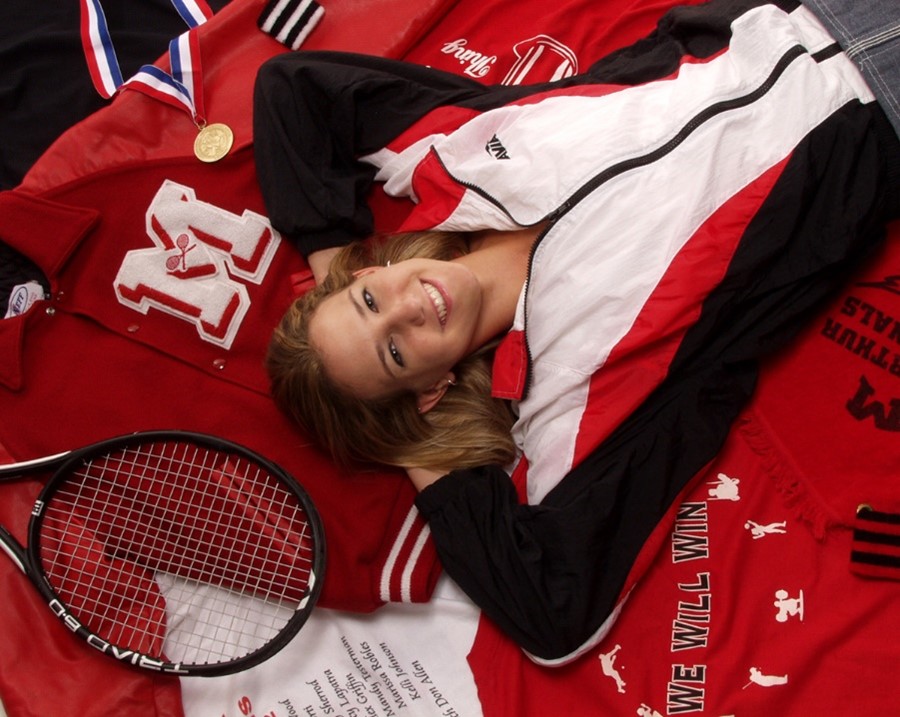
Props should complement the image. Props become part of the composition so the placement of the props and the color values of the props should fit into the color scheme of the image. The letter jacket and tennis racquet are within the color scheme of the jacket she is wearing.
All of the props in the image shown below were used to create the feel of the little girl’s own bedroom when she was actually in the den.

The location was selected for the light coming in from this window.
Addressing Physical and Environmental Aspects during and After the Session
Clients will often ask for images that portray concepts or capture elements which are personal to them. The key is in understanding their desire and then using tools and techniques to help them get what they want from their images.
Clients may want to place focus on or away from certain physical aspects about themselves. For example, some subjects may want to place emphasis on their long hair or their eye color while others may wish to feel beautiful in front of the camera regardless of any imperfections that they may see.
All of these concerns and many more are part of what is important to address for some clients. Photographers have to learn how to address these concerns behind the camera and in post-production.
Height - These can be addressed by raising and lowering the camera angle to achieve the end result. When posing two people with dramatic differences in height, you can have the taller subject sit down to bring the level of the faces closer together.
Body size - Subjects who are concerned about their body can be photographed from slightly higher or camera angles and with poses that lean the subject into the camera. Controlled lighting can be used to place lighting on the face. Body blocking by utilizing a prop is a great way to accentuate the subject’s face and help the subject feel more confident.
Hair - Subjects who are concerned about thinning hair, can be lit in the studio without using a hair light. Outdoors, subtractive lighting can be employed to block overhead light from the top of the head.
Scars and Blemishes - Clients with concerns about skin imperfections can be photographed with flat lighting to minimize detail of the imperfections. Lighting patterns can be used to place unwanted scars in shadow. There are also many editing options, if the client desires, to reduce or remove their scars and blemishes in post-production.
Not all of the subjects’ concerns and desires deal with negative issues. Sometimes they want to feature something positive.
Long Hair - Show off long hair by adding a hair light or kicker lights which will enhance the detail of the hair. Color gels can be used on hair to give it stronger color emphasis.
Body Curves - Directional lighting sculpts the body. For subjects who want to show off their curves in a sensual or romantic mood, use of a large light source allows the light to wrap around the face and the body to create highlight and shadow which define the body. On the other hand, a body builder might want a stronger definition of the muscles so a harder light source may do more to cut the detail of a well-defined body.
Emotion - Clients often wish to capture the emotions they are feeling at a particular time in their life. From love to loss or from success to grief, the use of color, lighting and posing helps to define emotion and provide psychological responses to an image.
Environmental Portraits - Clients often request portraits to be created on location, outdoors or in their home. It is important to select the appropriate environment to complement the subject. Environmental portraits need to be designed to include the environment as part of the composition. At the same time, care has to be taken so that the location does not overpower the subject.
Lens choice is a key factor in controlling the relative size of the subject to the environment. In some scenarios, a telephoto lens will compress the environment to help scale the subject with the background but in other scenarios, long focal lengths may be too limiting in revealing enough of a scene.
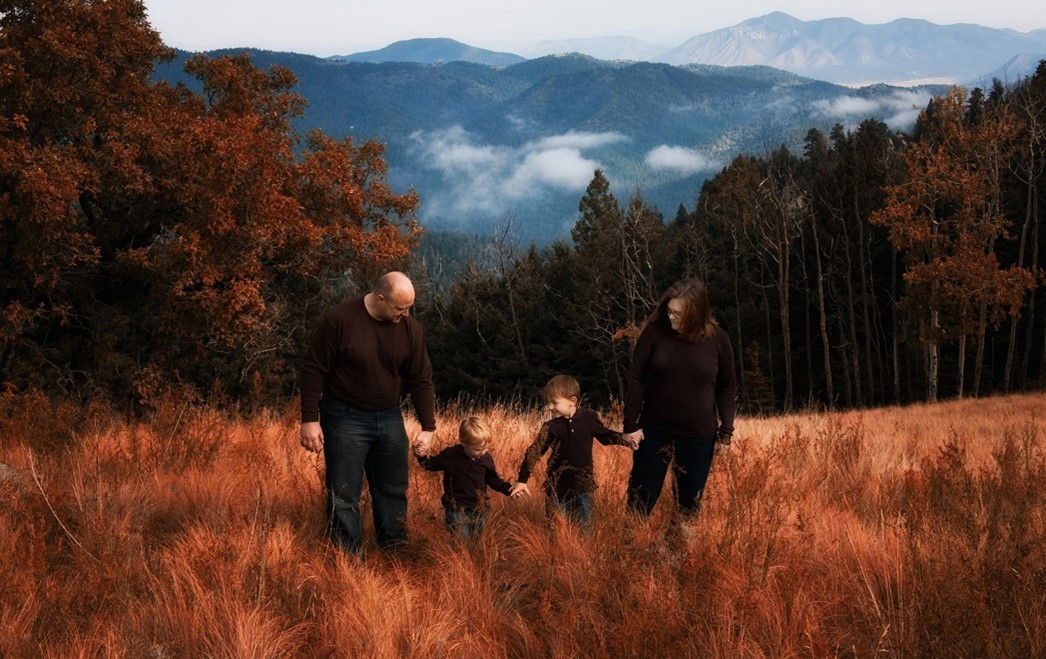
A medium telephoto lens was used with the image above. To provide a sense of location, the mountain tops were included in the composition. The compression of the lens makes the mountains appear closer to the subject.
Wide angle lenses may be perfect for establishing the scene or they may create too much separation between the subject and the background. It is up to the photographer to determine the best way to include the environment in the composition.
Also consider clothing selections and other props that might help complete the story.
Other Emphasis - Clients may want to celebrate the purchase of a new home, winning an award or a new job. Techniques available to tell these stories are endless. An Academy Award-winning actor might want a portrait with their award in the background. Adding a hint of more light on the statue in the background may be just enough to show it off without making the statement too blunt and direct.
Selective focus can be used to place emphasis on the ring on a new bride’s hand as she dances the first dance with her husband.